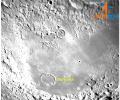
If any factor regarding the lander module appears unfavourable, then the landing will be shifted to August 27, said the Space Applications Centre-ISRO about Chandrayaan-3 on Monday.

According to ISRO officials, the spacecraft will be placed in a halo orbit around Lagrange point 1 (L1) of the Sun-Earth system, about 1.5 million km from the Earth. The L1 point is about one per cent of the total distance between the Earth and the Sun.

ISRO's Thiruvananthapuram-based Vikram Sarabhai Space Centre successfully conducted a series of drogue parachute deployment tests at the rail track rocket sled facility of the Terminal Ballistics Research Laboratory in Chandigarh during August 8-10.
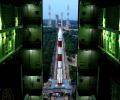
Aditya-L1 is a fully indigenous effort with the participation of national institutions., an ISRO official said.

The statements on Joshimath are creating confusion not only among affected residents but also among citizens of the country.

While the mission is a follow-up to the PSLV-C55 TeLEOS-2 mission launched in April this year, scientists in Sunday's mission will place the fourth stage of the PSLV rocket in a lower orbit.
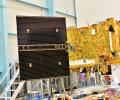
Aditya-L1 spacecraft is designed for providing remote observations of the solar corona and in situ observations of the solar wind at L1 (Sun-Earth Lagrangian point), which is about 1.5 million kilometres from the earth.

Once Aditya L1 reaches its destination, it will help measure various events happening on the Sun for the next five years.

The Indian Space Research Organisation (ISRO) will perform the final manoeuvre on Saturday to inject Aditya-L1 spacecraft -- the first space-based Indian observatory to study the Sun -- into its final destination orbit, some 1.5 million kilometres from the Earth.

Friday's mission is the fourth operational flight of LVM3 which aims to launch the Chandrayaan-3 spacecraft into a Geo Transfer Orbit.
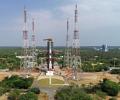
Days after landing on the Moon, India will aim for the Sun on Saturday with its maiden solar expedition, as ISRO's trusted PSLV will carry the Aditya L1 mission on a 125-day voyage to the Sun.

As many as 23 companies have evinced interest in acquiring the Indian space agency's Small Satellite Launch Vehicle technology, said a top official who termed it a "tremendous response". Chairman of Indian National Space Promotion and Authorisation Centre (IN-SPACe) Pawan K Goenka said on Thursday that they are keen to see how the private sector uses the Small Satellite Launch Vehicle (SSLV) technology. "There has been a tremendous response, 23 companies have (so far) shown interest in applying for this technology.

'With India's growing capabilities in the space sector, this creates promising opportunities for enhanced collaboration and market access.'

ISRO said the upper stage of the Polar Satellite Launch Vehicle - C37 (PSLV-C37) re-entered the earth's atmosphere on October 6, 2024 and the impact point was the North Atlantic Ocean.

Four years after it broke many hearts, Indian Space Research Organisation's Chandrayaan is all set to soar towards the moon in its third expedition on Friday in an attempt to put the country in an elite club of nations that accomplished lunar missions with a soft landing.
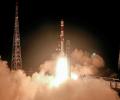
The Indian government has approved the construction of a third launch pad at Sriharikota, capable of sending heavier spacecraft into orbit. This new facility will support India's ambitious space program, including the Gaganyaan human spaceflight mission and a lunar landing. The launch pad will be built at the Satish Dhawan Space Centre and is expected to be operational within four years.
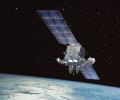
"On space, we will be able to announce that India is signing the Artemis Accords, which advance a common vision for space exploration for the benefit of all humankind," a senior administration official said hours before the meeting between Prime Minister Narendra Modi and President Joe Biden in the Oval Office.

ISRO's first mission in 2023 and SSLV's sequel saw a strange coincidence--it was launched at 9.18 am, the same time its predecessor lifted off from the Satish Dhawan Space Centre here on August 7, 2022 but could not deliver due to orbit anomaly and flight path deviation.

The Centre on Saturday night announced that the probe into alleged irregularities in the medical entrance exam NEET will be handed over to the CBI for a comprehensive investigation.

The engine is earmarked for the LVM3-M3 mission identified for launching the next 36 OneWeb India-1 satellites, the Indian Space Research Organisation said.

The mission objective is to ensure data continuity of ocean color and wind vector data to sustain the operational applications.

The Indian Space Research Organisation (ISRO) on Thursday announced that its lunar mission Chandrayaan-3 will be launched on July 14 from the space port at Sriharikota in Andhra Pradesh.

On Sunday morning, in its mission to place an earth observation satellite and students satellite into the low earth orbit, the SSLV-D1/EOS-02 blasted off precisely at 9.18 am amid cloudy skies from the first launch pad at Satish Dhawan Space Centre in this spaceport.

This is the first mission by the Indian Speace Research Organisation this year.
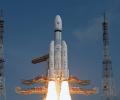
The test vehicle development flight (TV-D1) will be conducted at the Satish Dhawan Space Centre in Sriharikota in Andhra Pradesh to test the crew module that is scheduled to house Indian astronauts during the human spaceflight late next year.

The successful launch of the maiden solar mission of the Indian Space Research Organisation came on the heels of the historic lunar landing mission - Chandrayaan-3.

ISRO will now conduct further testing of VELC and its eventual integration with the Aditya-L1 spacecraft, it said in a release.

ISRO chairman S Somanath on Monday said instead of a success-based design in Chandrayaan-2, the space agency opted for a failure-based design in Chandrayaan-3, focused on what all can fail and how to protect it and ensure a successful landing.

The entire process being autonomous when the lander has to fire its engines at the right times and altitudes, use the right amount of fuel, and scan of the lunar surface for any obstacles or hills or craters before finally touching down.

Indian astronaut Shubhanshu Shukla will be the first Indian to travel to the International Space Station (ISS), flying aboard a SpaceX Dragon spacecraft as part of a joint effort between NASA and ISRO. Shukla, a group captain in the Indian Air Force, will serve as the pilot for the Axiom Mission 4, scheduled for launch no earlier than spring 2025. The mission will also carry the first astronauts from Poland and Hungary to stay aboard the ISS.

Artificial Intelligence, innovation and next-generation technologies figured prominently during the high-stakes discussion between Prime Minister Narendra Modi and US President Donald Trump at the White House, as the two sides announced transformative measures, including the US-India TRUST initiative, roadmap on accelerating AI infrastructure and INDUS Innovation, to boost tech ties.

The Indian Space Research Organisation on Sunday faced a blip in its plan to tap the small satellite launch vehicle market, as an anomaly in the placing of the satellites by the rocket led to deviation on its path thereby becoming 'no longer usable', Chairman S Somanath said on Sunday.
The mission is targeted for launch in the fourth quarter of 2024.
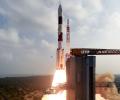
The Indian Space Research Organisation (ISRO) is all set to make its maiden commercial launch of 36 broadband communication satellites on board the space agency's heaviest rocket LVM3-M2, the countdown for which began early on Saturday at Sriharikota spaceport in Andhra Pradesh.
He said the test vehicle is ready at Sriharikota and the assembly work of the crew module and crew escape system has also begun.

Eminent rocket scientist S Somanath has been appointed as the chairman of the Indian Space Research Organisation as well as the space secretary, a personnel ministry order issued on Wednesday said.

On Thursday, the four-stage, 44.4 metre tall PSLV-C53 that blasted off from the second launch pad of Satish Dhawan Space Centre and placed the three Singapore satellites--DS-EO, NeuSAR and SCOOB-1 in intended orbit.

'When a Project Director is appointed, the whole organization -- including the Chairman ISRO -- works for his success. It is a lesson that has been of abiding value all through the other projects I have worked on,' recalls the late President, one of the earliest pioneers at ISRO.

The SSLV is designed to be affordable and amenable to industry production and aimed to function as a launch-on-demand platform for mini, micro or nano satellites.

The launch of Polar Satellite Launch Vehicle (PSLV-C52) is scheduled at 05:59 hours on Monday from the First Launch Pad of Satish Dhawan Space Centre, Sriharikota, the Bengaluru-headquartered space agency said.
 © 2026 Rediff.com - Advertise with us - Disclaimer - Privacy Policy - Sitemap - Feedback - About us - Terms of use - Grievances